
Are 30-Year Composite Shingle Roof Warranties Actually Usable?
Most homeowners hear “30-year roof” and assume they’re covered for three full decades. It sounds reassuring — long warranty, long peace of mind. But the truth most contractors won’t say out loud is that 30-year composite shingle warranties are rarely usable when your roof actually starts to fail.
Strict fine print, proration schedules, and loopholes tied to installation, ventilation, or weather mean that by the time a comp roof shows real problems, the warranty has quietly shrunk to pennies on the dollar. The “30-year” promise is often more marketing than meaningful coverage.
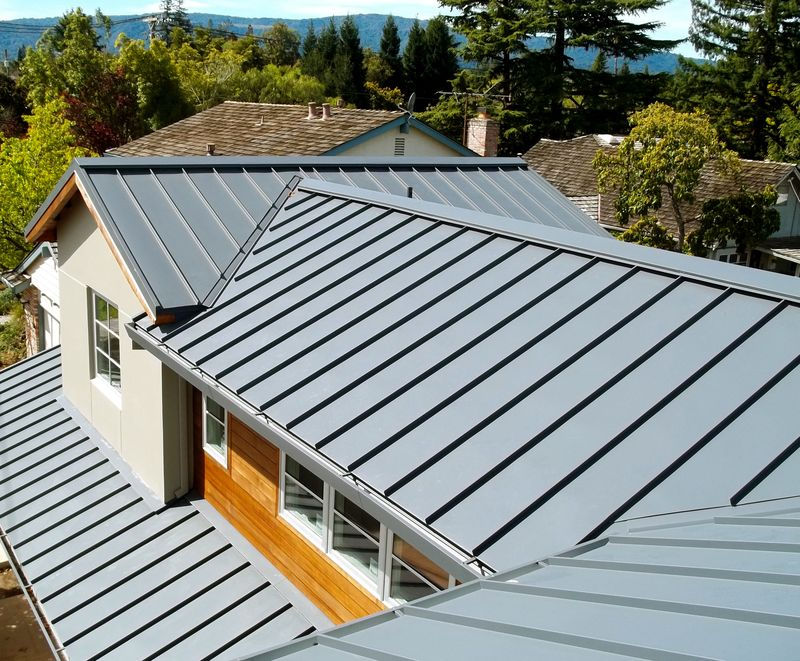
This is exactly where metal roofing stands apart. Instead of relying on materials that break down as they age, metal roofs are built for long-term performance — often lasting 50-100+ years. Their warranties are clearer, more durable, and genuinely usable because the product itself is designed to hold up for decades.
This blog breaks down why comp warranties fall short — and why a properly installed metal roof gives homeowners real protection, not just a promise printed on the box. If you want to read more on what not to do, check out our article, “How Not to Install a Standing Seam Metal Roof”.

What a 30-Year Composite Shingle Warranty Really Means
Before understanding why most 30-year comp warranties fall short, you need to know what type of protection you actually have. Roofing warranties come in two very different categories — and many homeowners don’t realize how much hinges on understanding the difference.
Manufacturer Warranties: Coverage for the Shingles Themselves
A manufacturer warranty covers the materials — the shingles. If a shingle cracks prematurely, loses granules abnormally fast, or fails due to a defect in the product, that responsibility falls on the company that produced it.
But here’s the catch:
“30-years” almost always refers to material defects only, not how long the roof will perform.
These warranties do not cover normal wear and tear like curling, fading, or deterioration.
They also don’t cover damage from storms, fallen branches, or other natural causes — those are insurance claims, not warranty issues.
In other words, the manufacturer is only responsible if the products themselves were flawed from the start. Anything caused by weather, age, or installation errors is outside their scope.

Workmanship Warranties: Coverage for the Installation
A workmanship warranty comes from the roofing contractor — not the product manufacturers. These warranties cover the installation itself. If the crew skips a critical step, installs the shingles incorrectly, or fails to ventilate the roof properly, any resulting issues would fall under the contractor's responsibility.
But just like manufacturer warranties, workmanship warranties have limits. They won’t cover problems caused by defective shingles, storm damage, or wear and tear.

Why Understanding the Difference Matters
This is where homeowners can get blindsided. Manufacturers won’t cover issues caused by poor installation, and contractors won’t cover issues caused by defective products. If something goes wrong, each party can point to the other — and unless you can prove exactly what caused the failure, you’re stuck in the middle. To be fully protected, you need both warranties working together… and even then, the coverage is far narrower than the “30-year” label suggests.
The Fine Print: Why Most Homeowners Can’t Use Their Warranty
Once you dig past the marketing language, most 30-year composite shingle warranties start to fall apart — not because they don’t exist, but because the fine print makes them extremely difficult to use. The biggest hurdle comes down to how the warranty is structured and how quickly your coverage shrinks over time.
Prorated vs. Non-Prorated Coverage
Most homeowners assume “30-year warranty” means 30 years of solid protection. In reality, the strongest part of the warranty usually lasts only a short window.
Non-prorated coverage is the part of the warranty that actually feels meaningful. During this period, the manufacturer will cover the full cost of replacement materials if the shingles fail due to a covered defect. Year one or year five, the coverage is the same. But this period is often surprisingly short.
After that comes the prorated phase, where coverage drops steadily as the roof ages. The older the shingles are, the less the manufacturer pays. Many composite shingle warranties begin heavy proration after 10-15 years, which means:
By year 15, you may only receive 10-20% of the material cost
You’re responsible for the remaining percentage.
And you still pay all labor costs, including tear-off and re-installation
So even if your claim is approved — which is rare — you’re still facing thousands of dollars out of pocket.
Strict Maintenance Requirements
Most warranties also include maintenance clauses that homeowners don’t know about until it’s too late. To keep the warranty valid, you may be required to:
Schedule annual inspections
Maintain detailed documentation
Ensure proper attic ventilation
Prove the roof has been cared for according to the manufacturer’s standards
If any of these steps were skipped — even unknowingly — the warranty could be voided.

Installation Loopholes
Even if the shingles truly fail, the manufacturer can deny the claim if they believe the issue was caused by installation errors. If the original contractor cut corners, missed a step, or didn't follow manufacturer guidelines, the warranty is no longer valid. This can create a frustrating cycle. The manufacturer blames installation, the contractor blames the product, and the homeowner is left paying for the replacement.
The Biggest Hidden Catch: You Must Prove the Failure Was a Manufacturing Defect
Even if you’ve met every maintenance requirement and your warranty is still technically valid, there’s one final hurdle that stops most homeowners from using it: you must prove the shingles failed because of a manufacturing defect. And that’s where many claims collapse.
Manufacturers Rarely Admit Fault
Shingles can fail for dozens of reasons. Because so many factors affect performance, manufacturers have plenty of ways to deny a claim. When an inspector shows up, the conclusion is almost always one of the following:
“Improper installation”
“Poor ventilation”
“Weather-related damage”
“Normal wear and tear/aging”
None of these count as a defect, which means the warranty doesn’t apply.
The Burden of Proof Is on the Homeowner
To prove a true product defect, homeowners often need extensive documentation: inspection reports, ventilation measurements, maintenance records, and sometimes even lab testing. Most people don’t have that — and even when they do, manufacturers can still argue the failure was caused by external factors.
Why Metal Roofing Warranties Are Different
After seeing how restrictive composite shingle warranties can be, metal roofing stands out for one main reason: when installed by a qualified metal roofing contractor, the product is built to last — and the warranties are actually usable. For guidance on choosing the right installer, see our article on “The Signs of a Good Metal Roofing Contractor”.
Fewer Failure Points
Metal roofs don’t rely on granules, asphalt binders, or layered shingles that break down over time. With fewer components that can fail, warranty claims are far more straightforward and far less common.

Engineered for Extreme Conditions
Metal roofing is designed to resist the very forces that shorten the life of composite shingles, including:
High winds
Heavy rain
Hail
Snow and ice
Fire
Harsh temperature swings
This durability means the roof performs consistently for decades, not just the first few years.
Standing Seam Systems Stay Strong
Standing seam panels lock together mechanically, creating a continuous, weather-tight surface. No granule loss, no curling, no asphalt aging — just long-term stability.

Premium Metals Outlast Their Warranties
Materials like copper, zinc, and aluminum routinely exceed their own warranty periods, often lasting 50-100+ years with minimal maintenance. The warranty becomes a reassurance, not a lifeline.
Clear Coverage, Fewer Exclusions
Metal roofing warranties typically cover both the materials and the finish, with far fewer loopholes or exclusions. Because the product is so reliable, the warranty doesn’t need pages of fine print to protect the manufacturer.
The Long-Term Math: Composite vs. Metal
When you look at the lifespan of each roofing type, the numbers speak for themselves. Composite shingle roofs often need replacement every 20-25 years, even though they’re marketed as “30-year” systems. By the time they start to fail, the warranty has usually prorated down to a fraction of its original value — leaving homeowners to cover most of the cost.
Metal roofing is a completely different equation. High-quality metal roofs routinely last 50-100+ years with minimal maintenance. Because the roof itself is built to last, you’re not relying on a warranty to save you — you’re avoiding the need for warranty battles altogether. A metal roof isn’t just a longer-lasting option. It’s a long-term investment that eliminates the cycle of replacement, proration, and frustration that comes with composite shingles.
Work With a Contractor Who Stands Behind Every Roof
At Custom Copper and Sheet Metal Roofing, we don’t rely on marketing warranties — we rely on craftsmanship. Our metal roofing installations are built to last for generations, using only the highest-quality materials and offering industry-leading warranty options like 40-year transferable and 50-year non-transferable coverage. When you invest in a metal roof with us, you’re choosing protection, longevity, and true peace of mind.


Comments